The Gorr Family History Project
The Gorr family was said to be from what is today Germany so why were they once living on the Russian Steppes?
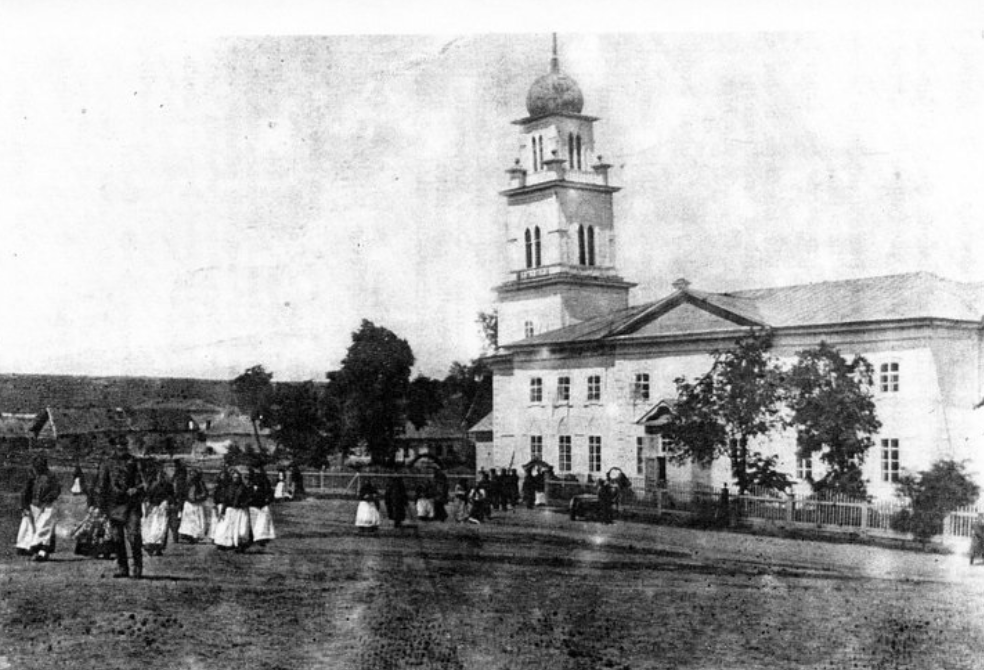
Yagodnaya Polyana Lutheran Church.Source: Volksfreund Kalender, 1911, via Volga German Institute
I began researching the Gorr family history in 2022, at the request of a family member. The project started with an interview to learn what family history had already been documented, recorded, or passed down. Family lore held that the family was from Germany and had arrived in Wisconsin around 1905. Little else was known.
As a researcher, I knew that "Germany" was not yet a unified country in this period, but a patchwork of states bound more by culture and language than political alliance. Tracing German-speaking ancestors from this era often means working through records across several different countries.
Working carefully backwards through time, proving one fact and connection at a time, I discovered the family had actually emigrated from the Volga German region of Russia — an exciting find for both myself and the family.
The Volga Germans were ethnic Germans who settled along the Volga River in southeastern Russia, near the city of Saratov. The region offered fertile soil and adequate water, but harsh conditions overall — conditions the colonists nonetheless preferred to the war and political upheaval they faced in their home regions of the Pfalz and Hesse. Recruited by the German-born Russian empress Catherine the Great in 1763, they were initially permitted to keep their German language, culture, traditions, and churches after settling.
By the late 19th century, the Russian Empire had turned toward an aggressive policy of Russification. The autonomy promised to the colonists on arrival was steadily eroded: their special privileges were formally revoked in 1871, and their long-standing exemption from military conscription was lifted in 1874. Against this backdrop, the Gorr ancestors — along with many other Volga Germans — emigrated to the United States, Canada, and South America.
A trail of evidence led from Wisconsin back to a port in Latvia, where in 1907 a 20-year-old Heinrich Gorr set sail aboard the St. Petersburg, from Libau to New York. Heinrich left clues to his origin scattered across various documents — on his World War I draft registration card, he recorded his birthplace as Jagodnaya Polyana, Russia. From there, I was able to trace his parents and earlier generations.
Among Heinrich's earlier ancestors was Nikolaus Goor (1745-1817), who — together with his wife, Anna — was among roughly 270 colonists who founded Jagodnaya Polyana, near Saratov, in 1767. They would have been among the last German settlers welcomed to Russia under Catherine the Great. The couple left their home in Nidda, Kr. Wettterau, Hesse, for the Volga region, departing Frankfurt shortly after their marriage in August of 1766 and travelling to a northern seaport before sailing on to St. Petersburg. From there, the party continued on to the Volga the following year. On arrival, each settler family was granted two horses, one cow, and a small sum of money by the Russian government — though many in the settlement party did not survive their first winter.
Knowing who your ancestors were — their names, birth and death dates, who they married — is an important part of understanding your past. But when research goes a little deeper, exploring the places they lived and the times they lived through, it becomes possible to understand, or at least imagine, their motivations, struggles, and successes. This project showed the family a side of their own past they had never known — inspiring, and a story worth having to pass down to future generations.
This portfolio case study shared with the permission of the family.
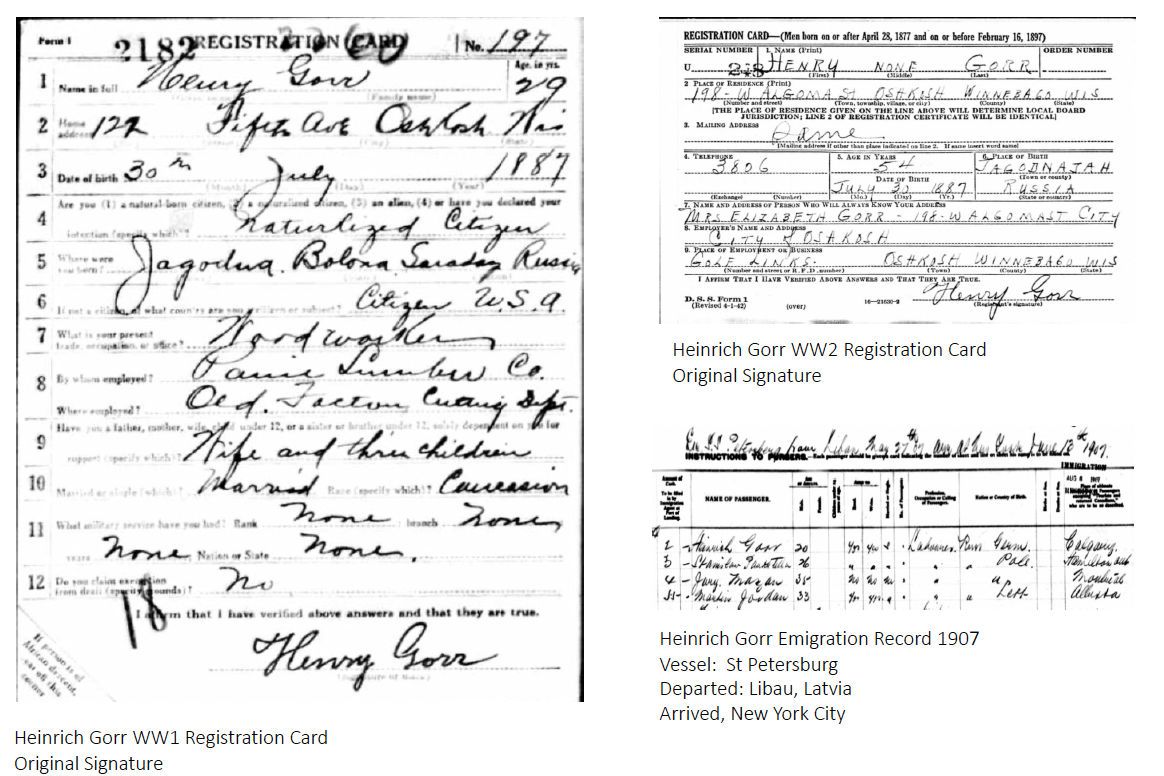
Records sourced via Ancestry.com, used here to illustrate the Gorr family's documented history.
Looking for a family history researcher to trace your own ancestry? Get in touch.
Complete the form with any questions about my services. If you'd like to arrange a no-obligation consultation, share some preliminary details about your project, and I'll get back to you within 48 hours.