The Welsh Slate Mining Industry
Roofing the World: A short history of the Welsh slate industry and the quarrymen & their families who left it behind to emigrate to North America.
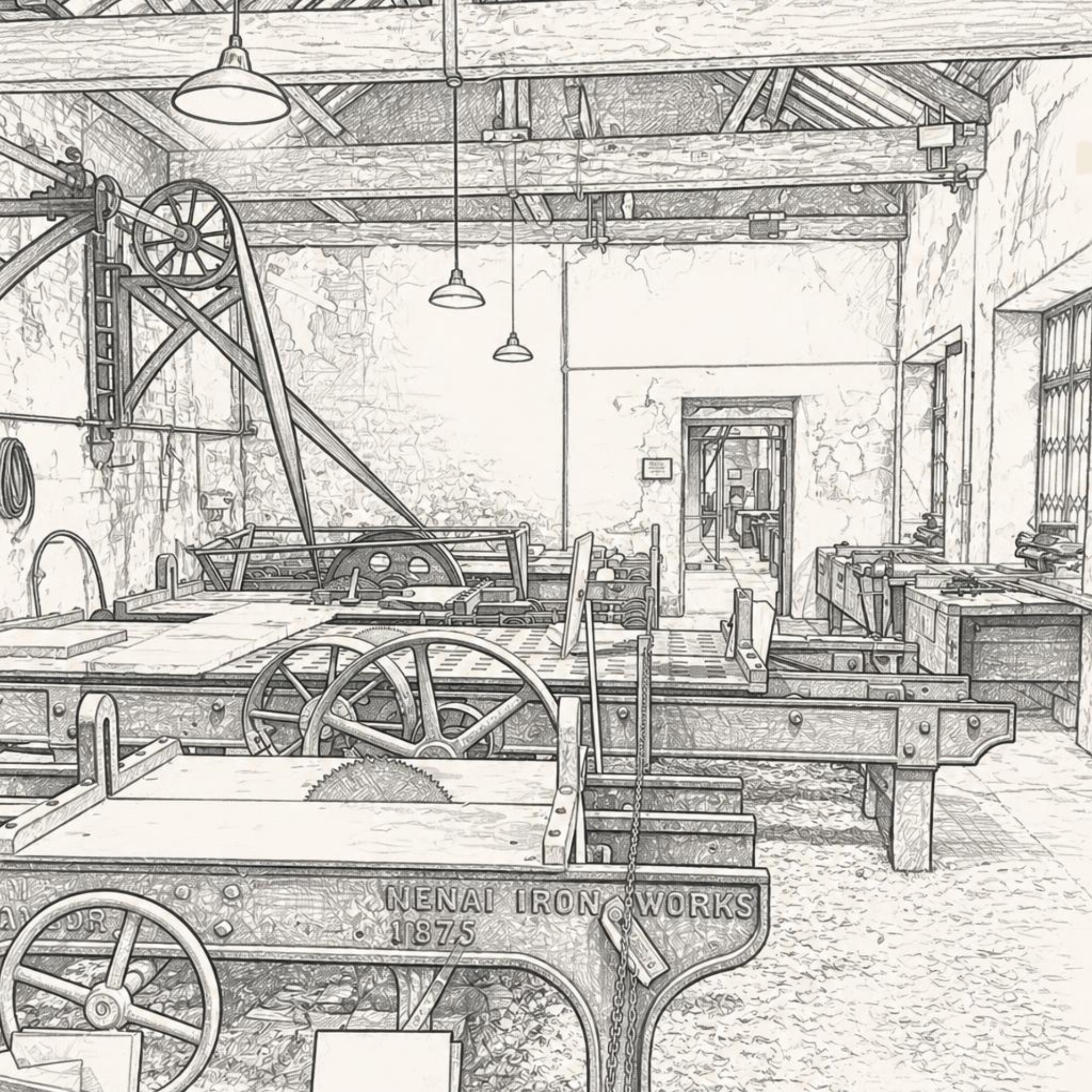
The Welsh slate industry has a long history, and one tightly interwoven with emigration to North America in the 19th and early 20th centuries. The vast majority of Welsh slate quarrymen who emigrated in this period set their sights on North America — a reminder of just how closely the fortunes of one small corner of Wales were tied to the growth of towns and cities an ocean away.
Slate has been worked in this part of Wales for nearly two thousand years. The Romans quarried it for their fortified buildings around Caernarfon, and centuries later, Edward I turned to Welsh slate again for his own fortifications, including Conwy Castle. But the industry that would eventually send thousands of Welshmen across the Atlantic didn’t take shape until much later — driven by the rapid urbanisation of the late 18th century, and the sudden, sharp demand it created for durable roofing material.
Slate travelled from the quarries to the coast on narrow-gauge railways, and from ports like Porthmadog, Port Dinorwic, and Port Penrhyn, out to all five continents. Germany was a major destination — in 1894 alone, over 80% of the slate shipped from Porthmadog went there. British ships also put Welsh slate to a second use: as ballast on the outbound leg of routes that would otherwise have sailed empty — vessels bound for America to collect cotton, for instance, carried Welsh slate below decks simply to keep the crossing profitable. It’s said that by 1830, half the buildings in New York City were roofed in Welsh slate.
By 1898, the slate industry in Wales employed 17,000 men and produced 485,000 tons of slate a year. The largest quarries, Penrhyn and Dinorwic, sat almost within sight of each other, on opposite sides of the same mountain. The work itself was exceptionally dangerous — quarrymen worked open-cast rock faces hundreds of feet in the air, suspended by nothing more than a hemp rope tied around the waist, using crowbars and hammers to prise heavy slabs from the rock. Ropes snapped. Men fell. Blasting accidents were common. Dinorwic kept an on-site hospital, where surgeons routinely amputated and stitched severe injuries on the spot, since many men would not have survived the long journey down the mountain to proper medical care. According to historical records kept by the North Wales Quarrymen’s Union, as many as 1,500 men were killed across the industry’s history, with thousands more injured.
Many quarrymen chose to leave Wales in the 19th century. Some sought escape from repeating cycles of crushing economic difficulties; others, many of them Nonconformist by faith, were drawn by the promise of greater religious freedom in North America. Welsh quarrymen were prized nearly wherever they landed — their skill with slate was a craft few North American workers could match. Quarries in Vermont, New York, and Pennsylvania became home to substantial Welsh communities, and by 1920, according to the Slate Valley Museum in Granville, New York, Welsh workers made up as much as half of the entire American slate industry. In Canada, Welsh quarrymen were actively recruited to open and run slate operations in Newfoundland and parts of Quebec.
For many, the move brought more than higher wages. In Wales, rigid class barriers meant a quarryman would likely spend his whole working life as exactly that — a quarryman. In North America, some of the same men who’d spent years hanging from a rope on a Welsh mountainside went on to own quarries themselves, or built new lives as owners and experts in coal and other metals — opportunities that simply hadn’t existed for them at home.
Not everyone who left stayed gone for good. Later in the 19th century and into the early 20th, some quarrymen effectively commuted across the Atlantic — working a stretch in North America for substantial wages, then returning home to Wales, made possible by increasingly reliable and affordable steamship travel. This pattern picked up sharply during periods of labour unrest, particularly the Great Penrhyn Strike of 1900 to 1903, when the North Wales Quarrymen’s Union in some cases funded transatlantic passage for its members — a way to ease the local labour surplus and help the union outlast the quarry owners in a prolonged dispute.
Anyone with Welsh ancestors in the slate industry, visiting Wales, should plan a stop at the National Slate Museum, housed in the historic workshops of Dinorwic Quarry itself. The museum is currently undergoing significant redevelopment and conservation, with a planned reopening in late 2026 — worth checking ahead, but a genuinely fitting place to learn more about the industry, and the people who built it.
The industry that had once roofed the world didn’t survive the century that followed. Cheap alternative roofing materials, arriving in the decades after the world wars, steadily eroded demand. Lost contracts, rockfalls, and mounting competition finally caught up with even the largest operations — Dinorwic, after nearly 200 years of continuous work, closed for good in 1969.
“Welsh quarrymen were prized wherever they landed — their skill with slate was a craft few local workers could match. ”
Sources: National Slate Museum (Amgueddfa Cymru); Slate Industry in Wales, Wikipedia; North Wales Quarrymen’s Union historical records; Slate Valley Museum, Granville, NY; Working Abroad: Welsh Emigration (Amgueddfa Cymru / People’s Collection Wales).