The Rise of Ancestral Travel
Heritage tourism and ancestral travel get talked about as though they're the same thing. They aren't.
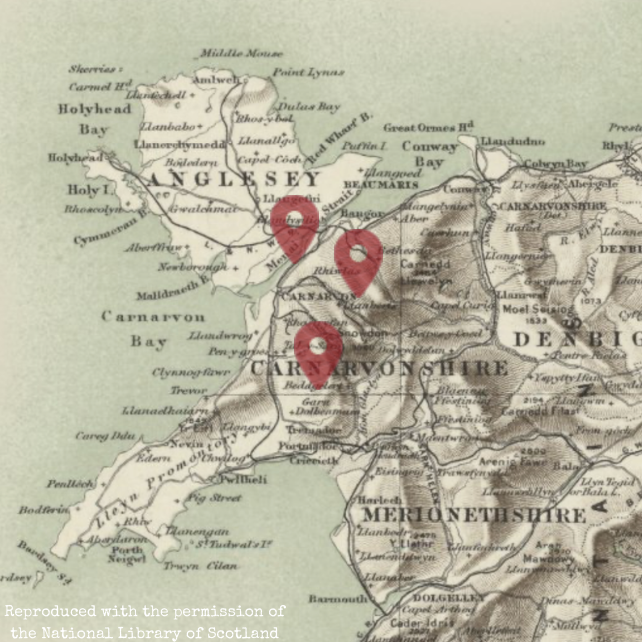
Heritage tourism is about exploring the general history and culture of a place your ancestors came from — the castles, the museums, the national story. It's brilliant for that, and I don't say this to diminish it. But ancestral travel is something else entirely: it's the parish where your great-great-grandmother was baptised, the townland your family farmed before the famine forced them out, the churchyard where three generations of your surname are buried under stone that's starting to wear smooth. It's standing in the exact place they stood. Seeing, as close as you can, what they saw. Spending the night in the village pub they likely knew and patronised themselves. Heritage travel tells you about a place. Ancestral travel tells you about your place — and your people.
Why I started doing this myself
It started with my own research — tracing family lines back to Wales, Scotland, England, Ireland, and Germany — and at some point the research stopped being enough. I wanted to see the places themselves: the chapel a family had worshipped in for generations, the street a great-grandfather had walked to work, the slate quarry that had fed a whole community for a century. So I went. And then my family wanted to come too, once they saw what it meant to actually stand there rather than just read about it on a page.
That's when it clicked for me: understanding your past isn't only a digital research exercise. It's something you can explore and walk into. And once I'd felt the difference myself, I knew it was something I wanted to offer other people.
It's not just me saying this
The interest here isn't a niche I've invented — it's a documented, growing pattern, and North American travellers are consistently at the centre of it. Condé Nast Traveler has covered ancestry travel as a genuine trend in its own right, not a footnote to general heritage tourism. And the numbers back it up: VisitScotland's most recent Scotland Visitor Survey found that 41% of long-haul visitors — from markets including the US, Canada, and Australia — cited Scottish ancestry as a major reason for their trip, with the figure at 38% for American visitors specifically. That's not a fringe motivation. That's close to half of Scotland's long-haul visitor market travelling there, at least in part, to find their own family.
Ireland tells a similar story. The country leaned into this deliberately, branding 2013 as "Family History Year" with an eye on the roughly 33 million Americans who identify as Irish, and a number of Irish operators — My Ireland Tour and Irish Emigrant Trails among them — now build entire itineraries around a visitor's own ancestry rather than a fixed tourist route.
What both countries have shown, independently, is that this kind of travel isn't a passing curiosity. It's a market people are actively building infrastructure around — and one where the demand is proven.
The trend is accelerating
If VisitScotland and Ireland's tourism board show that ancestral travel is an established, government-recognised market, newer data suggests it's now accelerating fast.
Search booking platform Bókun, a Tripadvisor company, reported in mid-2026 that global search interest in "ancestry travel" had risen 1,618% over the previous twelve months. The surge was sharper still around specific, bookable experiences: searches for "genealogy tours" climbed 6,671% year-on-year, and "family heritage tour" searches rose 5,490%.
Bókun's own read on the shift is telling. As Samuel Jefferies, the company's senior growth marketing manager, put it: travellers are increasingly seeking a sense of purpose over place — and ancestry travel offers exactly that, through storytelling, self-discovery, and personal connection rather than a checklist of sights.
“38% of the American visitors to Scotland are there in part to discover their roots.”
Sources: Condé Nast Traveler ("A Step-By-Step Guide to Planning a Memorable Ancestry Trip," Billie Cohen); VisitScotland (2023 Scotland Visitor Survey); Fáilte Ireland / Tourism Ireland (Family History Year 2013); Bókun (Tripadvisor); Globetrender.