
Stowaway Immigrants
Hidden Passengers: Stowaways and Ship-Jumpers in the Records. This man was stowaway German immigrant captured at Ellis Island. Thousands like him were determined to get to America.
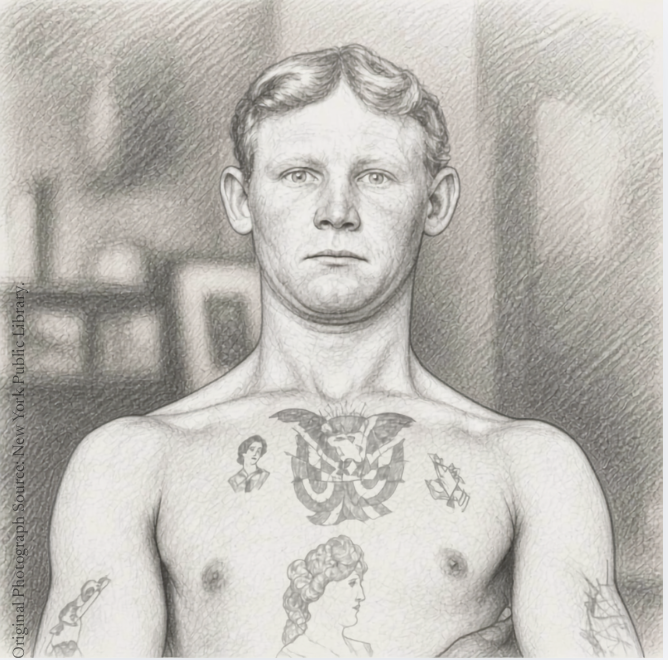
Hidden Passengers: Stowaways and Ship-Jumpers
More than 12 million people passed through Ellis Island between 1892 and 1954, and most left a tidy paper trail: a name on a manifest, a ship, a date. A small number did not. They crossed the Atlantic hidden in boiler rooms and cargo holds, or signed on as crew with no intention of sailing home. The records they left behind are different from the ones most researchers look for first.
Small in number, notable in impact
Ships arriving to America were required to carry passenger manifests from 1820 and in Canada from 1865, so most immigrants appear in these records. Stowaways were an exception. Figures that survive come from the early twentieth century. In the year to June 1920, US ports counted 2,392 stowaways, against roughly 430,000 immigrants admitted. In the last year before the First World War, the figure was 787. Small, then, but never zero, and it jumped when the war ended.
How they did it
Most had help. A 1911 US government report found that stowaways typically boarded with the connivance of a crew member, sometimes through go-betweens, and for a price. A decade later, the Commissioner of Immigration at Ellis Island described an organisation stretching from Trieste to Liverpool, with a going rate of about $30–40 to be let aboard and fed on the voyage.
The 1911 report describes one case in detail. When the Estonia reached New York from Libau in July 1907, several stowaways had paid a go-between and a fireman in roubles, mingled with steerage passengers, and gone ashore on passes alongside crew members. Two young women in men’s clothes slipped away that night. Another woman tried the same trick on the Saralov later that month, was caught on the dock.
Why they did it
Hardship was part of it, but the evidence points to more than one reason. The 1911 report describes two main groups: people without the money to pay and no crew job, and people already turned back at the port of embarkation, typically because of a contagious illness. A 1920 report from Baltimore adds economic distress in Europe and the West Indies, consular visa rules many could not meet, and crew members willing to hide them. Before the world wars, help cost about the same as a steerage ticket, so for some the barrier was paperwork or health rather than money alone.
What it was like
Conditions for paying steerage passengers were harsh enough: berths stacked two or three high, hatches locked in storms, buckets for toilets, and close to 5,000 deaths from disease on ships bound for America in 1847 alone.
Stowaways had it worse. Around 1920, a young male stowaway in an Ellis Island detention room described hiding under a ship’s boilers for three days until the heat drove him out. A German woman reportedly spent seven days in a ballast hold among 200 tons of gravel, living on black bread, sausages and a bottle of vinegar and water. Some stowaways jumped overboard in New York Bay rather than face being sent back.
Most were caught and returned, though 302 were admitted at New York in 1920 alone. A trade journal of the day judged it a mistake to assume all stowaways were criminals, and some Ellis Island officials plainly disagreed, in their mind stowaways did break the rules of their day.
The ship-jumpers
Deserting seamen were a different group. They signed on to a crew in Europe, then left the ship in an American port. In the year to June 1920, 18,543 seamen deserted at US ports, nearly eight for every stowaway, and the Commissioner noted that many shipped for the sole purpose of getting ashore.
Finding them in the records
Stowaways may appear on passenger lists or crew lists, so it’s worth checking both, and looking for the word “stowaway” beside a name. For deserters, the Immigration Act of 1917 brought systematic crew reporting, and NARA’s index to alien crewmen discharged or deserted covers 1917–1957. Before 1917, the trail is typically thinner. A naturalisation record that names a ship you can’t find your ancestor aboard is worth checking against that ship’s crew list.
Not every ancestor left a ticket stub. Some left a different kind of record, and the research is more interesting for it.
“I got on board at Harve. I hid for three days under the boilers. Then it got too hot for me and I came out.”
Sources: Abstracts of Reports of the Immigration Commission, vol. II (1911), “Alien Seamen and Stowaways”; The Nautical Gazette (8 January 1921) and Nauticus (29 January 1921); NARA index to alien crewmen discharged or deserted, 1917–1957 (A3417); History.com (Dave Roos, on the Steerage Act); Ellis Island Foundation; American Ancestors (NEHGS) passenger list guides; Library and Archives Canada; US Social Security Administration immigration table; GG Archives (reproductions, incl. The New York Times, 20 March 1910).