British Colonial America - A Starter Reference
Why did your ancestors cross the Atlantic in the 17th century? What records exist to research your ancestors in that period of colonial history?
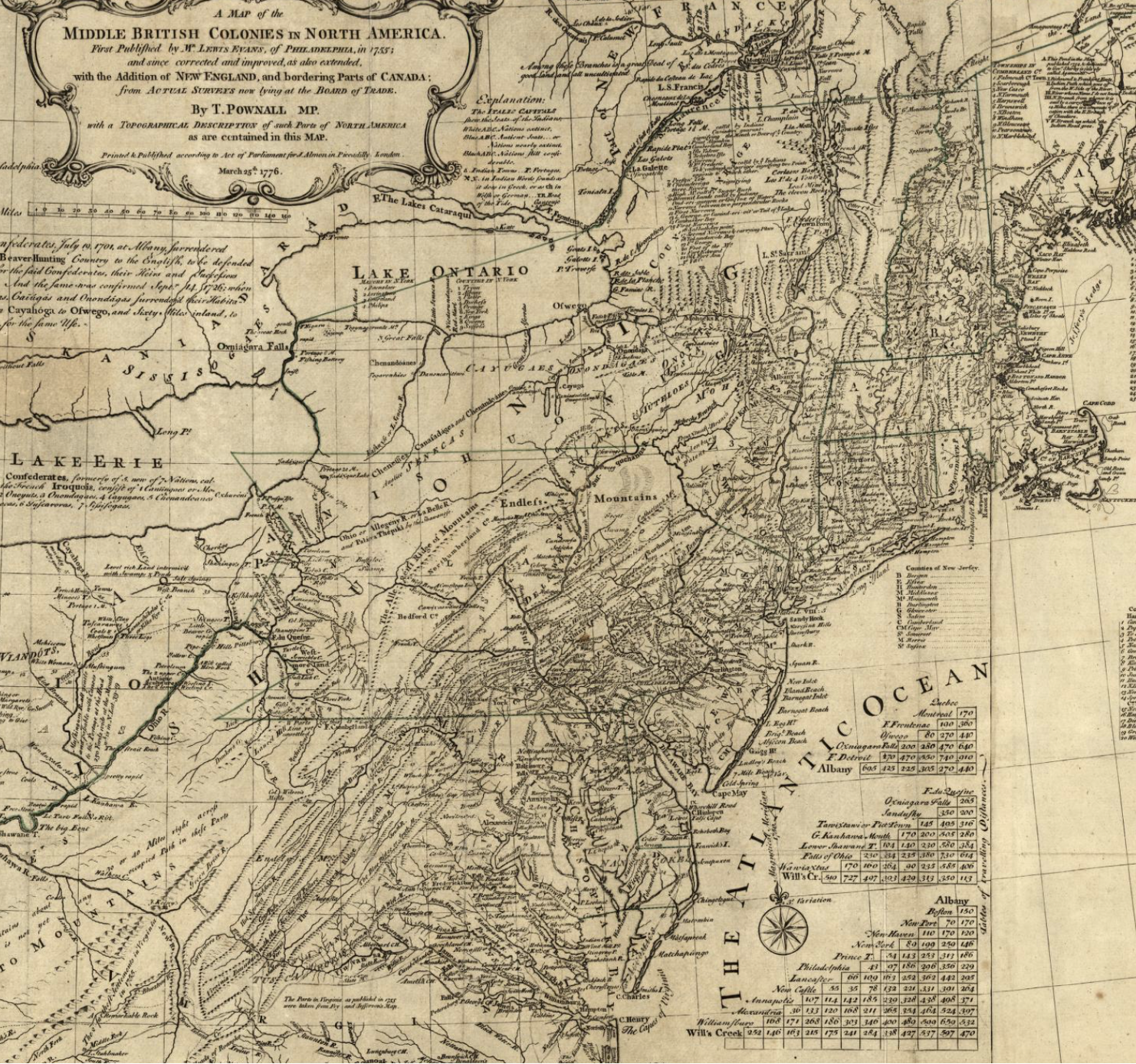
Many Americans can trace their ancestry back to the colonial settlers who began arriving on the eastern seaboard of North America in the 17th century. Their reasons for leaving were rarely simple — most fall into three broad categories: economic opportunity, religious freedom, and the ambitions of European crowns determined to plant a flag in the New World before their rivals did.
England’s claim to North America began earlier than most people realise. In 1497, King Henry VII sponsored the explorer John Cabot’s voyage across the Atlantic — a claim staked without any consent from the Native Americans who already lived there, but one that would serve as the legal foundation for every English territorial claim in North America that followed.
The first real attempt at settlement came almost a century later, in 1585, under Elizabeth I. Sir Walter Raleigh sponsored an expedition to establish a colony at Roanoke, in what’s now North Carolina — though Raleigh himself never made the crossing; the colony was led first by Ralph Lane, and later by John White. Both attempts failed: the first through food shortages and conflict with the indigenous population, the second in genuinely mysterious circumstances, leaving Roanoke to history as the “Lost Colony.” The next serious attempt came in 1607, under James I: Jamestown, in modern Virginia, established under royal charter. Plymouth followed in 1620 — a fundamentally different kind of settlement, founded not by merchants seeking profit but by religious pilgrims seeking the freedom to worship as they chose.
As the 17th century went on, settlement spread the length of the Atlantic seaboard, and the character of each region diverged sharply. New England was settled almost entirely by the English. The Middle Colonies — New York, New Jersey, Pennsylvania, Delaware — became a genuine patchwork of Dutch, Swedish, English, German, and French settlers. The Southern Colonies developed a different structure again: English elites, English indentured servants beneath them, and a rapidly growing, forcibly transported population of enslaved Africans.
The popular story of colonial settlement often glosses over a significant set of facts: the New World was not a place of freedom for everyone who arrived there. During the English Civil War of 1642 to 1651, thousands of Scottish and Irish prisoners of war, captured by Oliver Cromwell’s forces, were shipped to Virginia and New England as forced labourers — with no say in their own migration, and no real standing once they arrived. Indentured servitude, too, was far more central to colonial settlement than many people realise. Historians estimate that between 50 and 75 percent of all European immigrants to the colonies in the 17th century arrived as indentured servants, not free settlers. In exchange for the cost of passage, food, and shelter, these men and women signed a legal contract to work for a master, typically for four to seven years. In practice, they were treated as property throughout that term — bought, sold, and inherited, unable to marry, travel, or trade without permission, and subject to severe punishment if they disobeyed or tried to run. If they survived their contract, they were granted “freedom dues” — often a small plot of land, clothing, or grain — and became, officially, “freemen.” As the supply of indentured servants declined later in the century, the colonies shifted decisively toward permanent African slavery instead, an institution that would last 246 years, from the arrival of the first captive Africans in Virginia in 1619 to nationwide abolition in 1865.
All of this matters directly for anyone researching an ancestor from this period. Colonial-era research is genuinely difficult — there were no birth certificates, no federal census, none of the standardised records later generations take for granted. Instead, researchers work from a patchwork of ship logs, church registers, land patents and deeds, tax lists, wills, and court documents — and what survives depends heavily on a person’s legal and economic status at the time. Many enslaved people left no documentary trace at all, a silence in the record that is itself part of the history.
Family histories written in the late 18th and 19th centuries can help fill some of the gaps — they often preserve genuine living memory passed down from parents and grandparents. But they should be treated as a guide, not as fact: family memory can be mistaken, embellished, or, in some cases, deliberately self-serving, particularly among wealthier families eager to claim a connection to royalty or to the earliest, most celebrated settlers.
Genealogical research into this period is slow, and it demands real care — it’s remarkably easy to confuse one William Smith with another in a colony where names repeat often and records are thin. Sometimes the records simply don’t survive, in any archive, in any form. But when a clear line can be traced through this period — when the thread genuinely connects a family in the New World back to a specific place in the Old — the effort is worth every bit of the difficulty.
Sources: Encyclopedia Britannica, "Lost Colony"; Wikipedia, "Roanoke Colony"; North Carolina History, "Roanoke Island"; First Colony Foundation, "The Roanoke Colonies."
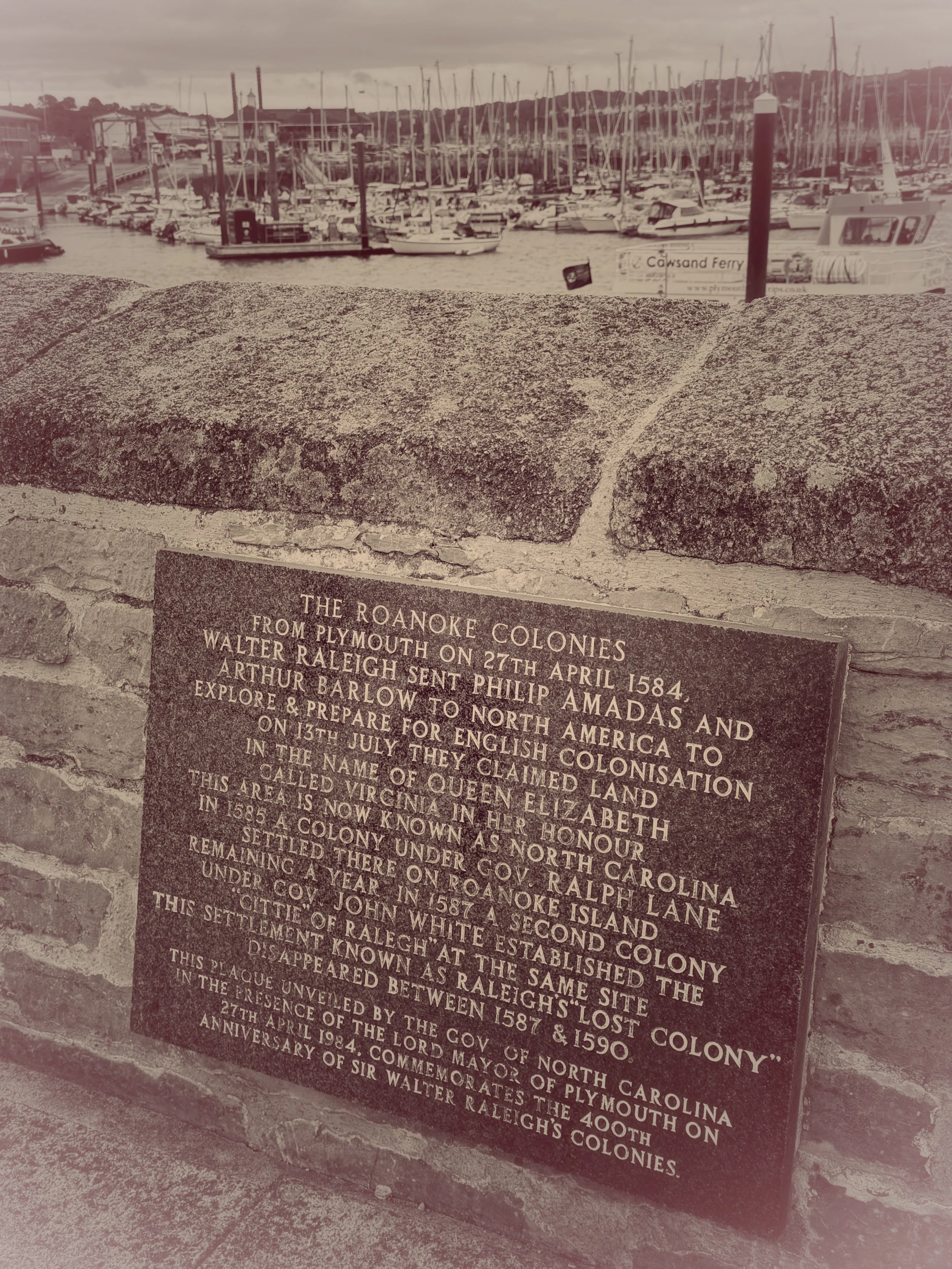
Plymouth Harbour, Devon, Monument to the Roanoke Colonies, Authors own Collection.